
全國(guó)熱線服務(wù):
新聞資訊 Top label
- Fiberglass Composite Air Ducts: Revolutionizing Modern HVAC Systems
- The Complete Guide to Honed Tubes: Precision Engineering for Modern Industry
- Digital pH Sensors: Revolutionizing Industrial Process Control and Environmental Monitoring
- Precision Gas Flow Meters And Mass Flow Controllers: The Ultimate Guide To Technology Selection, Calibration, And Application Optimization For Semiconductor, Pharmaceutical, And Research Processes
- Laser Cutting Technology: Working Principle, Types & Application Guide
- Casting Vs Forging Vs CNC Machining — Decision Framework For Custom Components
Cold drawn seamless steel pipe and hot rolled seamless steel pipe production process flow
Cold-drawn seamless steel pipe: round tube blank→heating→perforation→heading→annealing→pickling→oil coating (copper plating)→multi-pass cold drawing (cold rolling)→ billet tube→heat treatment→straightening→hydraulic test (flaw detection)→symbol→warehousing.
Hot-rolled seamless steel pipe: round tube blank→heating→piercing→three-roll cross rolling, continuous rolling or kneading→de-tubing→sizing (or reducing)→cooling→ billet tube→straightening→hydraulic test (or flaw detection)→symbol→warehousing.
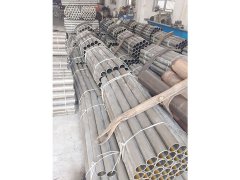
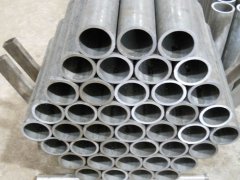
Carbon steel cold-drawn steel pipes use hot-rolled steel coils as raw materials. They are pickled to remove the oxide scale and then cold-rolled continuously. The product is a hard-rolled coil. Due to the cold work hardening caused by continuous cold deformation, the strength and hardness of the hard-rolled coil increase and the toughness and plasticity decrease. Therefore, the stamping performance will deteriorate and it can only be used for parts that are easily deformed. Hard rolled coils can be used as raw materials in hot-dip galvanizing plants because hot-dip galvanizing units are equipped with a retreat front. The weight of hard-rolled coils is usually 6 to 13.5 tons, and the inner diameter of the steel coil is 610mm.